A book by Dayna Blackwell
Running Go Agents in Production
Identity, governance, and cost for agents at scale
Every call an agent makes asks five questions. This book builds the platform that answers them.
Run Go agents for a company: many people, teams, and agents on one platform, every call saying who it acts for, and rules, not the model, deciding what an agent may do.
It picks up where the first book ends, with an agent that works, and builds what it takes to run agents for other people.
In progress · about 50% complete
The first book
The project
What it builds
The first book ends with one agent shipped. This one builds the platform around it: a service people sign in to, a credential on every call that names the person, the team, the agent, and the run, and a gateway that every agent call passes through before it reaches a service.
On that platform you add more agents, agents that call other agents, and tenants that can’t see each other, then limit what each one can reach and spend. Last, you change it safely: a model or a prompt changes only after a release gate says it may, and one trace follows a call through every part.
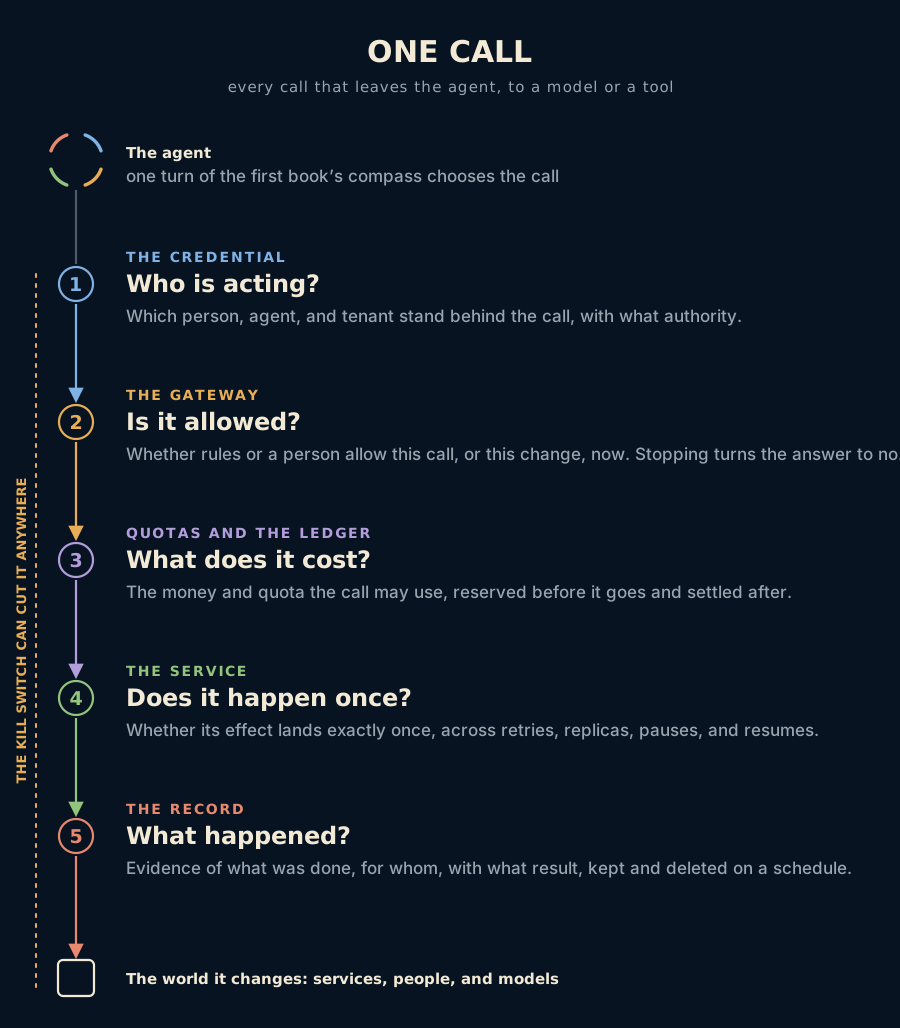
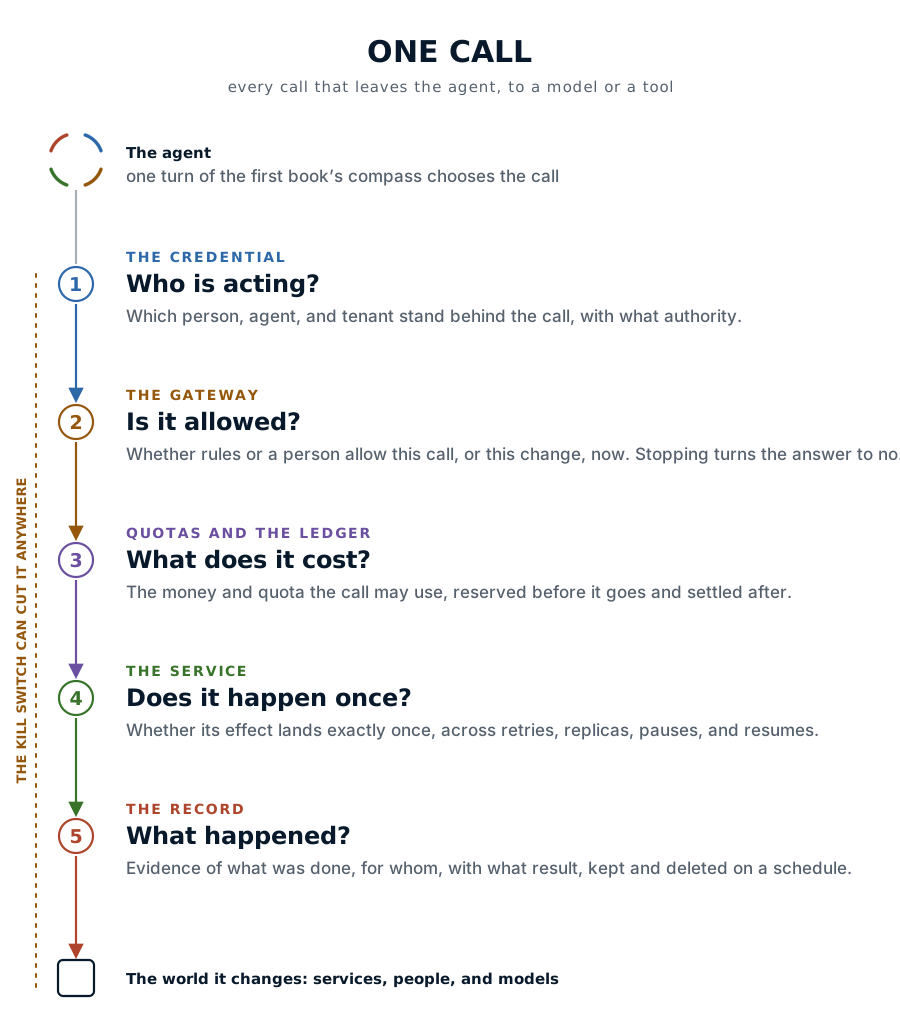
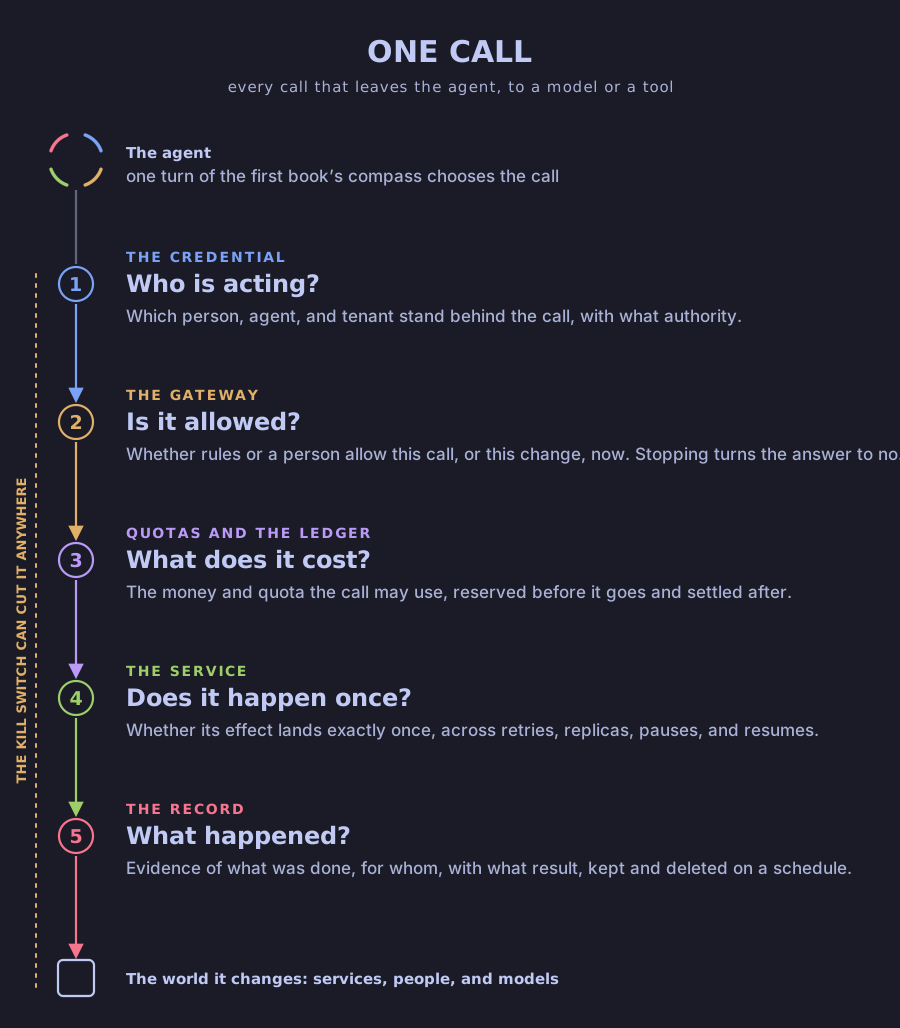
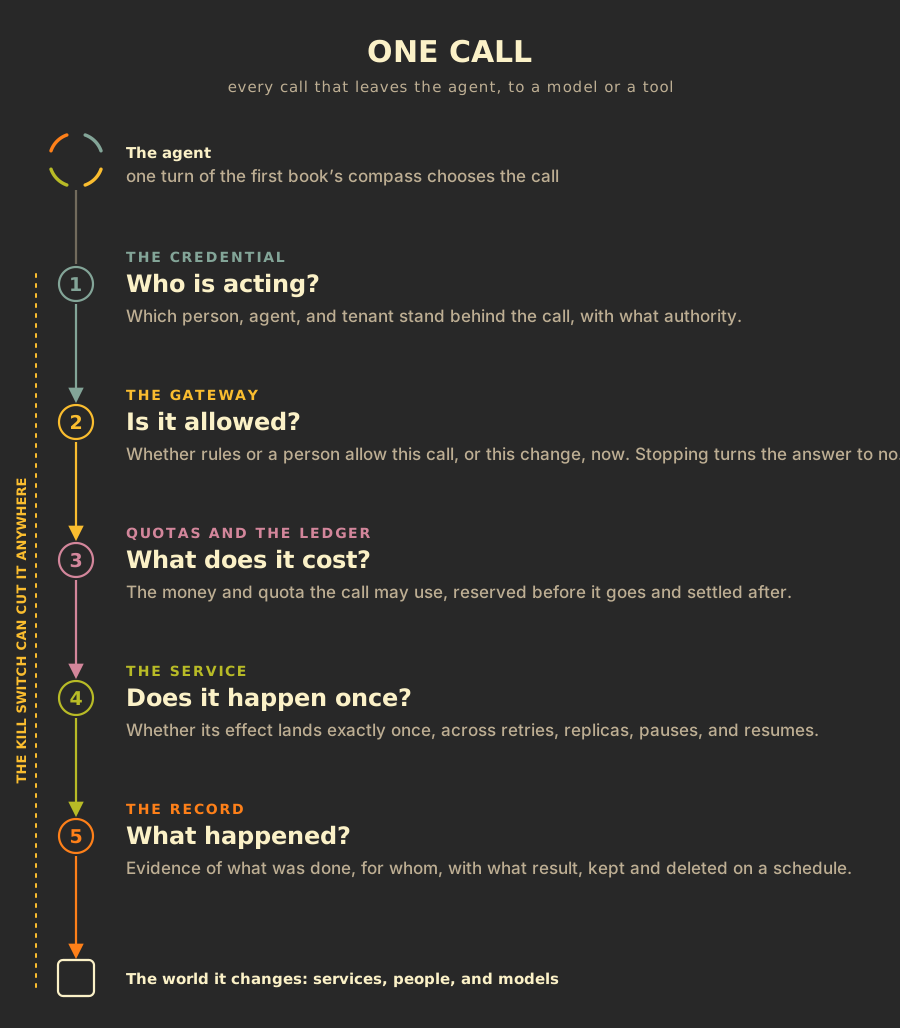
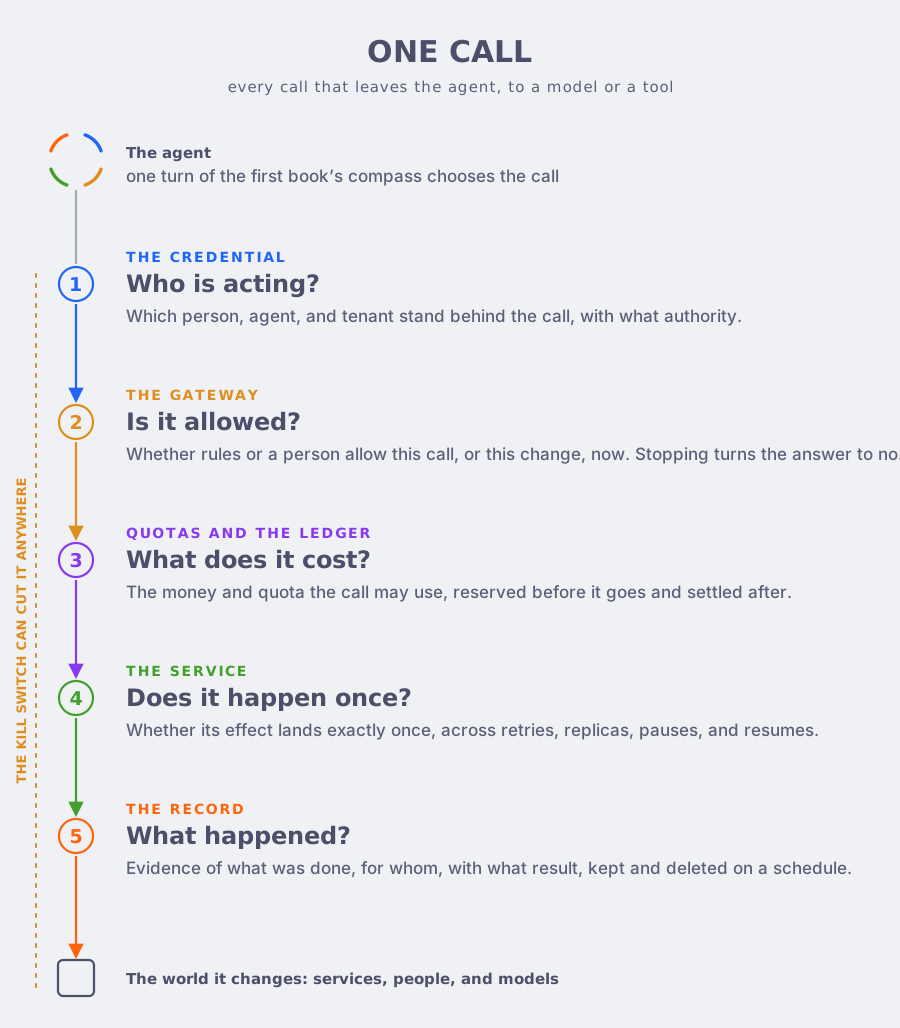
Table of contents
Four parts, one platform
The titles so far. The book is in progress, and chapters can change before it is out.
Opening
The call path
Part 1
Who is acting
Who is acting, for whom, in which tenant
Sign-in and sessions
Delegated access to other services
MCP servers as resource servers
Part 2
Governing what agents do
The gateway
The tool supply chain
Keeping the model out of the decision
Human approval at scale
Audit and the kill switch
Part 3
Running many agents
Agents calling agents
Tenant isolation
Scaling out
Cost, quotas, and the model gateway
State and migrations
Part 4
Changing it safely
Evals and model changes as a release gate
Following one call across the platform
Incidents
Data: retention, privacy, and deletion
Capstone Is it ready to launch?
Status
In progress
About 50% complete
Chapters 1 to 17 are drafted. Chapter 18, the capstone, and the appendices are next.
The book is being written and has no release date or store page yet. It follows Building AI Agents in Go, which you can buy now and which covers everything this book builds on.
The Production section of this site already covers some of its topics, such as agent identity, agent gateways, and approval.